
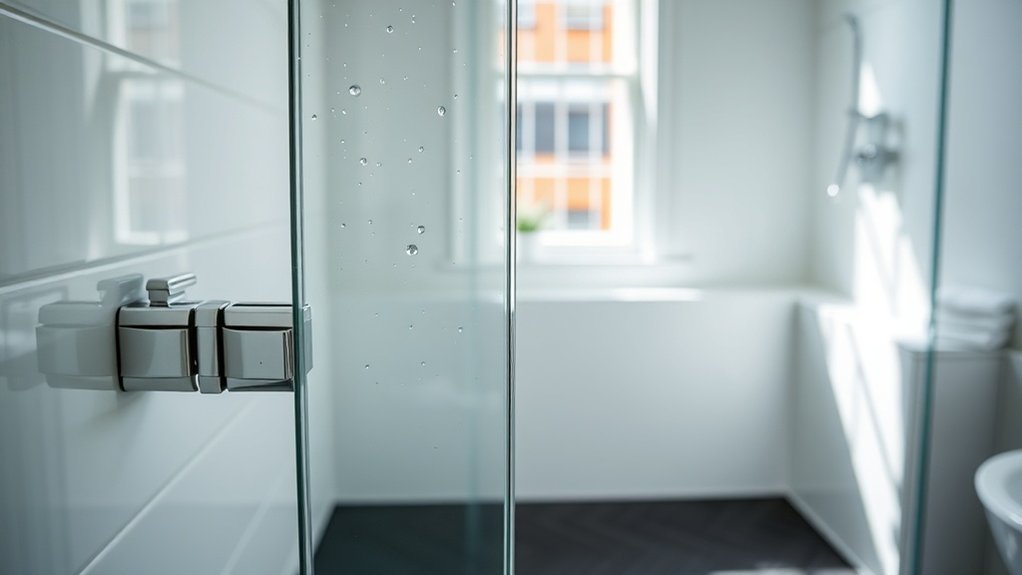
Getting a shower screen right in Chinbrook starts with the room, not the catalogue. We measure the walls, tray and floor, note where the door, window and radiator sit, check the water pressure, and only then suggest a frameless, sliding, quadrant or walk-in layout. For most installations we recommend 8 to 10 mm toughened glass, quality seals and an easy-clean coating to cope with hard water and daily family use. Awkward alcoves and loft bathrooms are handled with templated bespoke screens, and the sections below explain how we specify each element.
Key insights
- Accurate measurement of walls, tray and door swing in a Chinbrook bathroom decides whether a stock screen will fit or a bespoke one is needed.
- Frameless hinged, sliding, quadrant and walk-in screens each suit a different room size and layout, with different trade-offs on access and water control.
- Toughened 8 to 10 mm glass, frosted, tinted or switchable smart glass cover safety, privacy and easy cleaning in a steamy bathroom.
- Hardware finishes such as brushed brass, matt black and stainless steel should match the taps, towel rail and radiator already in the room.
- Sloping ceilings and irregular alcoves in Chinbrook terraces and lofts call for templated screens aligned to tiles, slopes and drainage.
How to Choose the Right Shower Screen in Chinbrook
Three things decide which shower screen works in a Chinbrook bathroom: the measurements, the layout and the glass. Begin with what cannot move. Where does the bathroom door swing, where is the window, and is there an extractor fan that will clear steam so seals do not stain or warp?
Then look at the shower itself. A high-pressure pumped or mains-fed system throws more spray, so it needs deeper channels, tighter seals and sturdier hinges to stop weeping at the edges. A gentler gravity-fed shower lets you get away with slimmer frames and bigger single panes.
Finally, choose glass thickness, hardware finish and handle style to sit with the taps and radiator already in the room so everything reads as one set. Confirm the tolerances with us before ordering, because a templated bespoke screen only fits if the survey matches the finished tiling.
Shower Screen Types and Which Suit Chinbrook Homes
With dimensions, pressure and finishes settled, the next question is format. Chinbrook’s housing is mostly compact terraces, loft conversions and extended semis, so each type has to respect limited floor area, moisture control and the way the room is lit.
- Frameless hinged – The choice when you have spent on good tiling and want an uninterrupted view of it; it needs solid walls to fix into.
- Sliding or bypass – Good in narrow rooms where a swinging door would hit the basin or towel rail.
- Quadrant / curved – Makes the most of a square corner, softening the room and giving a larger tray than you would expect.
- Walk-in panels – Best for level-access bathrooms you want to keep for the long term, letting light through and letting underfloor heating work across the whole floor.
Measuring Your Bathroom for a Perfect-Fit Shower Screen
Do not order glass, hinges or a tray on the strength of a plan drawing. A Chinbrook bathroom has to be measured as built. Use a laser measure wall to wall at tray height, at waist height and at head height, and write down each figure, because walls in Victorian terraces and new-build flats alike are rarely truly plumb.
Record the inside length and width of the tray and the height of its lip above the finished floor. Mark where the shower valve, outlet and waste sit, so the edge of the screen clears the controls and leaves room to get in and out comfortably.
Then draw the whole room to scale, including skirting, radiator and any fitted furniture. The sketch lets us check door swing, tolerances and where the seals will land, which is the difference between a screen that fits and one that leaks.
Frameless Shower Screens in Chinbrook: Pros, Cons, Cost
Frameless screens lead most high-end Chinbrook bathroom refits for a simple reason: with no metal around the glass, the tiles and brassware do the talking. The glass is thick enough to be structural on its own.
- Pros – Nothing interrupts the view, panes can be cut to suit an awkward alcove, and with few metal profiles there is less to clean and a more architectural finish.
- Cons – Walls must be plumb and fixings solid; a badly fitted frameless screen either leaks or puts stress into the glass.
- Cost – Supplied and fitted in Chinbrook, expect somewhere around £650 to £1,500 or more, depending on glass thickness, hinge quality and any bespoke shaping.
- Best use – Large-format tiles, concealed valves and a linear drain, where you want an open, spa-like enclosure.
Framed and Semi-Framed Shower Screens for Family Bathrooms
In a family bathroom that gets used several times a day, a framed shower screen protects the glass edges, keeps water in the tray and is more forgiving of walls and trays that are slightly out of true. Semi-framed screens keep a lighter look while still giving you a reinforced perimeter, toughened glass and secure fixings. Knowing how the two constructions differ in wear and upkeep helps you pick a screen that survives children, keeps the floor dry and still looks the part.
Benefits Of Framed Screens
Frameless gets the attention, but framed and semi-framed screens are the practical choice for busy family bathrooms in Chinbrook. The frame adds stiffness, controls how the door moves and keeps performing when several people use the same enclosure every day.
- Enhanced bathroom aesthetics – Slim profiles in a colour that matches the taps and radiator give the room a coordinated, up-to-date look.
- Optimised water efficiency – Full-perimeter seals and overlapping profiles keep spray in the tray, so less heat is wasted drying the floor.
- Cost-effective longevity – The frame shields the glass edges from knocks, which cuts the chance of a chipped pane needing replacement.
- Design adaptability – Framed systems can be built around low ceilings, odd alcoves and existing pipework without losing watertightness.
Semi-Framed Safety Features
Semi-framed screens give Chinbrook families most of the openness of frameless glass with reinforcement exactly where doors get pushed and pulled hardest.
The usual build is an anodised or powder-coated aluminium perimeter with the exposed vertical edges kept slim. The glass is still toughened safety glass, often with an anti-shatter film, set into channels that resist twisting when a door is slammed. Magnetic seals and hinges that pull the door closed keep water inside, which means fewer puddles and fewer slips on tiles.
Rounded profiles, flush screw heads and low tracks remove sharp edges and trip points. Together these details give a modern, lightweight look without giving up robustness in a household where the shower runs morning and night.
Over-Bath Shower Screens for Small Chinbrook Bathrooms
Many Chinbrook terraces and new-build flats simply do not have room for a bath and a separate enclosure. An over-bath screen turns the tub into a proper shower space without losing the bath, which improves both the look of the room and how much water ends up on the floor.
The details that matter are:
- Glass specification – 6 to 8 mm toughened glass, ideally with an easy-clean coating to reduce spotting.
- Screen geometry – a fixed, hinged or folding panel chosen to suit a narrow room or a window above the bath.
- Sealing strategy – magnetic closures, a discreet bottom strip and a deflector where the panel meets the bath rim.
- Hardware integration – a slim wall channel, minimal hinges and a layout that works around the overflow and filler.
Walk-In and Wet Room Shower Screens for Modern Apartments
In a modern Chinbrook apartment, a walk-in or wet room screen is the most space-efficient way to shower without compromising on quality. Slim framing and well-chosen fixings keep the sightlines clean and let daylight reach across a small floor plan. The glass has to be safety rated and the floor falls have to be planned so water reaches the drain every time, which keeps the finishes and the flat below dry.
Space-Saving Layout Solutions
A compact Chinbrook apartment bathroom rewards careful planning. Treat the walk-in screen as a way of organising the room rather than just a splash guard; where it sits, how big it is and what is built around it all change how roomy the space feels.
Some layouts that work well:
- Corner walk-in bay – tuck the screen into a corner to keep the middle of the room clear and shorten the drain run.
- Linear wet zone – line up screen, drain and valve along one wall so pipework is short and the room looks tidy.
- Dry-line threshold – position the screen to catch spray, which keeps the rest of the floor dry and reduces the load on underfloor heating.
- Integrated niches – build shelves into the stud wall so bottles stay off the floor and the glass stays clear.
Minimalist Framing And Fixings
In a small Chinbrook flat, slim framing and well-engineered fixings make a glass panel part of the architecture rather than a bulky fitting. The thinner the frame, the more the glass seems to disappear, and the larger the floor looks.
We use anodised aluminium or stainless steel profiles with crisp edges and hidden joints, fixed through recessed channels, low-profile wall clamps or a slim ceiling stabiliser bar, so there is no need for a heavy corner post.
Safety Glass And Drainage
Safety detailing runs from the glass to the drain in any walk-in or wet room in a Chinbrook apartment. Durability, easy access and accurate drainage all have to be solved in a small footprint.
Toughened glass of 8 to 10 mm takes the knocks of daily use while spanning a wide opening with no frame. Beneath it, the floor gradient and drain must shift water quickly so nothing seeps into the structure or the neighbours’ ceiling.
Specify:
- Toughened or laminated safety glass with certified impact resistance.
- An easy-clean coating to slow limescale and keep the glass clear.
- A linear channel drain set along the screen edge for a tidy line.
- A pre-formed shower former so the falls are correct and water never pools.
Black Grid and Industrial-Style Shower Screens in Chinbrook
Borrowed from warehouse conversions, the black grid screen now turns up in Chinbrook ensuites and family bathrooms alike. The dark framework gives the room crisp lines and divides the shower from the rest of the space without making it feel smaller.
We use powder-coated aluminium or steel frames with a corrosion-resistant finish, holding 8 to 10 mm toughened glass for rigidity. The industrial look comes from the detailing: evenly spaced bars, mitred corners and slim wall channels lined up with tile joints, niches and brassware.
Hinged, sliding and fixed-panel versions deal with tricky footprints, low ceilings and odd alcoves. With a proper survey and bespoke fabrication, the grid lands exactly where the tiles expect it and stays square for years.
Frosted, Tinted and Smart Glass Options in Chinbrook
Frosted, tinted and switchable smart glass let you control privacy, light and the overall look of a shower screen in Chinbrook. Frosted glass softens the light and hides the person showering while still looking clean and architectural next to tiles and fittings. Where privacy needs to change through the day, smart glass flips from clear to opaque at the press of a switch, a useful option for a shared bathroom, a small flat or a premium ensuite.
Benefits Of Frosted Glass
- Sightlines are blurred while most of the light still passes through, which suits overlooked terraces and tightly packed plots.
- The etched texture hides water spots and fingerprints, so the screen looks clean for longer between washes.
- Gradients, bands or patterns can be positioned to line up with tile joints, niches and hardware.
- Laminated frosted glass adds strength and a little sound damping as well as privacy.
Smart Glass Privacy Solutions
Even a small Chinbrook bathroom with close neighbours can have exactly the privacy and light you want by combining frosted, tinted and switchable glass. Opacity no longer has to be fixed at the time of ordering.
Smart glass uses a PDLC film inside the laminate; a low-voltage current turns the panel from clear to opaque instantly. It can be wired to a wall switch, a dimmer or a home automation system, and when clear it looks like any other minimal screen.
Tinted glass cuts glare and heat, which is useful in a south-facing Chinbrook bathroom with a large window, while frosting diffuses light and hides outlines. Combining these treatments lets you set the balance of comfort, privacy and style for the way you use the room.
Picking Shower Screen Hardware and Finishes to Match Your Décor
The glass makes the first impression, but the hinges, handles and profiles decide whether the screen looks like it belongs in your bathroom. The aim is a finish that matches the rest of the room and hardware that keeps working.
-
Metals and finishes Match hinges, handles and profiles to the taps and towel rail. Brushed brass, gunmetal and PVD black are hard-wearing and look consistent across different manufacturers.
-
Mechanisms and hinges Ask for solid brass or stainless steel hinges with a published cycle rating so the door stays aligned and moves smoothly for years.
-
Profiles vs. minimal frames Very slim aluminium profiles suit a clean, linear scheme; a fully framed screen can carry a bolder colour as a feature.
-
Fastenings and seals Colour-matched screws and end caps with clear seals keep the edges tidy and avoid visual clutter.
Safety Glass Standards and Building Regulations in Chinbrook
A shower screen is a large sheet of moving glass in a wet room, so safety standards and the Building Regulations are the starting point of the design, not a check at the end. In Chinbrook that means toughened glass to BS EN 12150 or laminated glass to BS EN 14449, with glazing in critical locations meeting the impact requirements of Approved Document K.
Part M comes into play where level access is needed, and Part B where the bathroom sits on an escape route in a flat or shared building. In a period conversion, minimal-fixing systems avoid damaging original fabric while still giving you marked safety glass and a slip-resistant threshold. Keep a record of the glass type, thickness, edge finish and fixing method in case Building Control asks for it.
Shower Screen Prices in Chinbrook by Type and Size
Planning a budget for a shower screen in Chinbrook means weighing the cost of framed, semi-frameless and frameless types against the look and performance you want, then understanding how size moves the price through extra glass, hardware and installation time. Matching type and dimensions to the room keeps the cost in check without weakening the screen or spoiling the design.
Cost Range By Type
The price of a shower screen in Chinbrook depends mainly on configuration, glass thickness, hardware grade and overall size, so set the budget against the type of enclosure you need. Ventilation and the quality of the silicone detailing also affect how long the screen lasts, which is part of the real cost.
- Frameless hinged screens – Usually the dearest, because of the thicker glass and the heavy-duty hinges it needs.
- Semi-frameless enclosures – A step down in price, with slim lines but more economical framing.
- Fully framed sliders – Generally the cheapest, using thinner glass and standard rollers.
- Walk-in panels – Mid to upper range, depending on the coating, the bracing and how the floor seal is detailed.
Price Impact Of Size
Size affects shower screen prices in Chinbrook as much as type does. Each extra centimetre of width or height adds glass area, loads the hinges harder and makes installation more involved, and beyond standard sizes suppliers move to thicker glass, longer tracks and reinforced channels.
Costs rise in steps rather than smoothly: a small increase in width can push the glass from 6 mm to 8 mm or require an extra support bar, which adds to both materials and labour. Very wide walk-in panels need precise templating and usually two fitters.
Balance the look you want, such as floor-to-ceiling glass or a wide wet-room span, against the structural limits and the budget, and settle on dimensions that deliver the effect without unnecessary cost.
Custom-Made vs Off-The-Shelf Shower Screens in Chinbrook
Both routes can produce a good result in Chinbrook; the choice depends on how exactly the screen has to fit the room, what performance you need and how particular you are about the look. Waterproofing, hardware loading and keeping water in the tray all weigh on the decision.
- Stock screens suit standard alcoves and give predictable performance, quick delivery and a lower initial price.
- Made-to-measure screens deal with sloping ceilings, out-of-square walls and loft pitches using templated glass and bespoke fittings.
- For a true minimal frameless look, custom fabrication lets the glass edges line up with tile joints and light from the window.
- In a tight room, a custom threshold and seal cuts overspray, saves water and lowers the risk of a slip.
Best Shower Screen Suppliers and Installers in Chinbrook
Turning a design into a watertight, long-lasting enclosure depends as much on the supplier and fitter as on the specification. In Chinbrook you want a firm that understands how loads pass into the wall, what glass tolerances mean and how sealing systems work, rather than a fit-and-forget trade.
Look for suppliers who carry out a technical survey, produce CAD drawings and can show samples of hardware finishes and low-iron glass. Ask for test data on hinge cycles, corrosion resistance and slip-rated thresholds.
For fitting, choose a team that has handled complex layouts and unusual glass, such as curved or fluted panels and minimal walk-ins. The best installers coordinate with your tiler, underfloor heating contractor and plumber so the screen, the falls and the waterproofing all line up.
Common Shower Screen Problems and Fixes
Even a well-chosen screen develops faults if the detailing, fitting or upkeep slips. Most problems come back to water control, movement in the frame or cleaning that has been skipped, and spotting them early keeps the repair small.
- Persistent leaks – Check the screen is level and square, then strip and reseal with a mould-resistant sanitary silicone; upgrade the threshold strip or seals if they are worn.
- Door misalignment – Adjust hinge tension and fixings; worn pivots should be swapped for better components so the door swings cleanly.
- Glass staining and limescale – Apply a nano-coating, squeegee after every shower and use a mild non-abrasive cleaner once a week.
- Mouldy or degraded seals – Pull out the old gaskets, clean the channels and fit new precision-cut seals to restore a crisp, dry edge.
When to Replace and Upgrade Your Chinbrook Shower Screen
Maintenance only goes so far. A point comes when patching a tired screen in a Chinbrook home costs more than it is worth, and a new one brings better performance, safety and looks. The signs are limescale that has etched into the glass and will not clean off, seals that keep failing, and framed units that have corroded or started to flex.
Pitted hardware, loose hinges and a door that no longer meets the tray squarely all point to lost watertightness and a safety concern. A screen that predates current toughened glass standards or has no easy-clean coating is well overdue for replacement.
A modern replacement brings low-iron glass, precise rollers and slim profiles, cuts down on cleaning and improves light, space and access, particularly in a walk-in or wet-room layout designed for today’s Chinbrook bathrooms.
This service is delivered by our Chinbrook glaziers.
Frequently Asked Questions
How Do I Clean Limescale From Shower Screens With Chinbrook’s Hard Water?
Mix equal parts white vinegar and warm water in a spray bottle, coat the glass and metal, and leave it for ten to fifteen minutes before wiping with a non-scratch pad and squeegeeing dry. Stubborn build-up responds to a citric acid cleaner made for hard-water areas. Avoid abrasive powders, which scratch the glass and make it hold scale faster. Once clean, apply a nano-glass sealant, which makes water bead off and slows the return of deposits. A squeegee after every shower does more than any cleaner to keep a Chinbrook screen clear.
Can Chinbrook Council Tenants Install Shower Screens in Rented Bathrooms?
Generally yes, but only with the landlord’s written permission first. Council and housing association tenants in Chinbrook have the right to request alterations, and fixing a screen means drilling tiles and sometimes altering the waterproofing, so consent is needed before any work. Submit a short proposal with the screen type, fixing method and who will fit it. Ask whether the council classes it as an improvement or an alteration, and get it confirmed in writing who is responsible for maintenance and whether the screen has to be removed when you leave.
Are Shower Screens Suitable for People With Limited Mobility or Disabilities?
Yes, provided the layout and features are chosen with the user in mind. A walk-in or wet-room design with a level floor, a wide opening and minimal framing allows wheelchair access and room for a carer. Add grab rails fixed into solid wall, a slip-resistant floor finish and toughened or laminated glass. A fold-down seat, controls within easy reach and a contrasting frame colour for visibility complete the setup. We can design the screen alongside an occupational therapist’s recommendations so the bathroom stays accessible as needs change, without looking clinical.
How Do Shower Screens Affect Ventilation and Mould in Small Chinbrook Bathrooms?
A screen can help or hinder depending on the design. A panel that stops short of the ceiling, or a pivot or slider that opens wide, lets steam escape rather than trapping it in the enclosure, which reduces the risk of mould. Treated glass and minimal framing give condensation fewer places to collect. The biggest factor is the extractor fan: fit one that is sized for the room and positioned near the top of the screen, and run it on a humidistat or timer. Light, reflective finishes also help the room dry out between showers in a small Chinbrook bathroom.
Can I Soundproof a Shower Screen to Reduce Bathroom Noise in Apartments?
Not completely, but you can take the edge off the noise. Treat the screen as a lightweight partition: use acoustic laminated glass, which has a sound-damping interlayer, and close every gap with silicone and compressible gaskets so sound cannot leak around the edges. Most bathroom noise in flats travels through the walls and floor, so insulating the stud walls and ceiling void with mineral wool makes more difference than the glass alone. Soft finishes outside the shower, such as rubber-backed mats or a fabric blind, absorb reflected sound and make the room quieter.
Summary
You now know the measurements, the glass, the frame options and the costs, and you know that Chinbrook’s hard water and small bathrooms reward careful choices. A screen specified for your layout and your household will stop the cycle of leaks and limescale for good. Call us for a free survey and quotation, and we will template, supply and fit a shower screen that suits the room.