
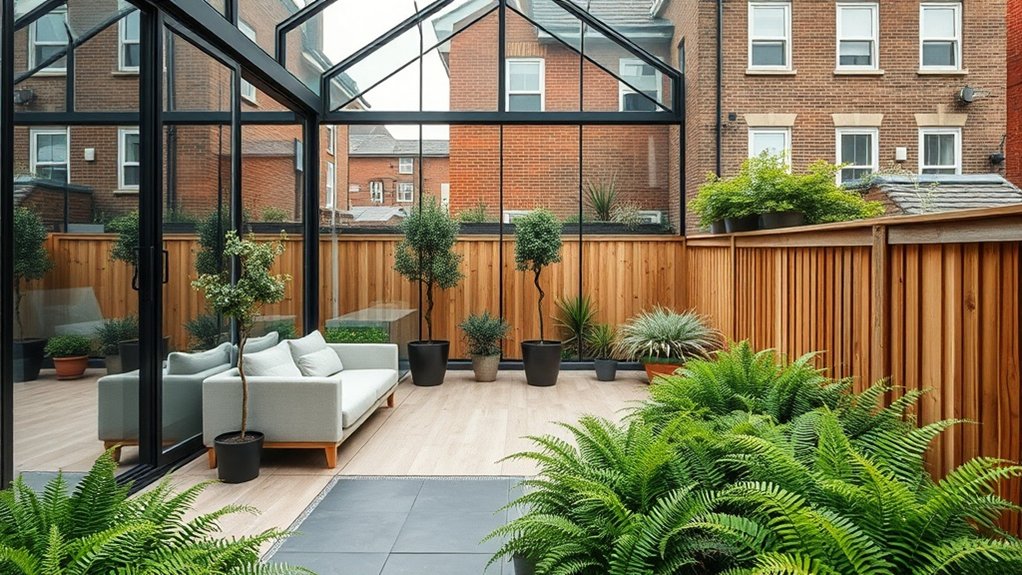
Good garden room glazing in Downham has to do several things at once: keep U-values at or below 1.2 W/m²K, control summer sun, protect your privacy and stay inside the planning and boundary rules that apply to outbuildings. Frame material (aluminium, timber or composite) and glass type (low-E, solar control, laminated or acoustic) decide how much heat you lose, how much noise gets in and whether the room overheats in July. Orientation, shading and an airtight fit then keep it comfortable all year.
Key insights
- Specify double or triple glazing with a U-value of 1.2 W/m²K or better, a low-E coating and argon fill so the garden room stays usable through Downham winters.
- Thermally broken aluminium, timber or composite frames with warm-edge spacers reduce condensation, heat loss and cold bridging at the glass edge.
- Position the glass and plan shading (roof overhangs, external blinds) to capture daylight and views without glare or overheating, which matters most on south-facing Downham gardens.
- Check permitted development limits and Downham planning policy on height, distance to boundaries and overlooking before fixing the design of large glazed elevations.
Key Decisions for Downham, BR1 Garden Room Glazing
Glazing for a Downham garden room starts with a few variables that set performance, cost and compliance: which way the room faces and how exposed it is, the U-values and solar gain you can accept, how much noise needs blocking, the frame system and the planning or Building Regulations limits on the plot.
From there it is a trade-off between daylight and overheating. South and west elevations usually get a low-g solar-control glass that still passes plenty of visible light, while the thermal target is often below 1.0 W/m²K using argon-filled double or triple glazing on warm-edge spacers. Add an acoustic laminate if the plot sits near a railway or a main road, and think about planting: a green wall or external shading can cool the glass in summer without blocking low winter sun.
Glazing Styles for Downham Garden Rooms
The glazing style you pick sets the balance between daylight, thermal performance and how the room is used. Floor-to-ceiling glass gives the best views and the most solar gain, so it needs low-g coatings, good U-values and a shading plan. Sliding and bi-fold doors then decide how you get in and out, how the room ventilates and how it connects to the garden.
Floor-To-Ceiling Glass
Floor-to-ceiling glass looks simple, but it is one of the most demanding options for a Downham garden room because you are building a transparent wall. Structural calculations, thermal performance and privacy have to be worked out together from the first sketch. A solar-control coating keeps gain and glare down and improves the U-value without making the glass look dark. Toughened or laminated panes, concealed frame systems and accurate tolerances are needed to handle wind load and movement, and acid-etched bands or fritted dots can add privacy and shade while keeping the clean modern look. Line up the glazing joints with the floor and ceiling junctions so the glass reads as one continuous surface.
Sliding And Bi-Fold Doors
Even on a small Downham, BR1 plot, sliding or bi-fold doors turn a garden room into a space that opens fully to the outside. Thermally broken aluminium systems with low-U double or triple glazing keep the room comfortable in both January and July. With sliding doors, look for slim sightlines, good seals and a precision track with a low or flush threshold. Bi-folds suit wider openings where you want the whole wall out of the way; check the hardware is rated for thousands of cycles and comes with multipoint locking. Frames come in any RAL colour, including different colours inside and out.
Light, Privacy and Views in Downham Garden Rooms
For an office, a studio or a quiet retreat, the quality of light and privacy in a Downham garden room comes down to where the glass goes and how it is specified. Begin by looking at how the sun moves across the plot: put the main panes to the south-east or south-west, then add overhangs, fins or external blinds to tame glare and summer heat. Use clear low-iron glass on the garden side and obscure, fritted or switchable glass where you face a neighbour. Fixed picture windows at seated eye level combined with a strip of high clerestory glazing pull light deep into the room while cutting overlooking.
Planning Rules for Glazed Garden Rooms in Downham
Well-designed glazing is wasted if the Downham garden room breaches planning rules or Building Regulations. Height, footprint and distance to the boundary all need checking, especially where a large glass wall faces a neighbour or the road, and rooflights and sliding walls still have to respect overlooking and privacy limits. To keep the design ambitious but compliant:
- Use slim frames to reduce the apparent bulk while staying within permitted development limits on height and area.
- Place the glass so there is no direct line of sight into neighbouring windows or gardens.
- Detail drainage, thresholds and weatherproofing so building control can sign the structure off.
- Prepare accurate drawings and a specification that record glass areas, structural supports and access.
Energy-Efficient Garden Room Glazing in Downham, BR1
A glazed garden room loses heat fast when it is specified casually, but it can perform like a low-energy extension if the envelope is treated with the same care. Start with an unbroken thermal line: well-insulated roof, insulated floor slab and junctions detailed to remove cold bridges. To take winter sun without summer overheating, model the solar exposure of your plot and adjust glass area, orientation and shading to suit; in a built-up Downham setting that may mean external blinds, a brise-soleil or a selective tint. Airtightness then needs pairing with background ventilation so the room is efficient in use and not just on paper.
Frame Materials and Glass Options for Downham Garden Rooms
Choosing glazing for a Downham garden room means pairing the right frame material with the right glass so thermal performance, durability and upkeep all stack up. Frames differ in insulation, stiffness and how well they handle large glazed areas; glass options then address heat gain, heat loss, security and noise.
Comparing Frame Materials
Aluminium gives the slimmest sightlines and the stability needed for large sliders. uPVC delivers good U-values cheaply but with chunkier profiles. Engineered timber feels warm and machines precisely but must be refinished on schedule. Composite frames combine the rigidity of aluminium with the insulation of timber. Beyond the numbers, look for profiles slim enough that the wall seems to vanish into the garden, finishes that still look crisp after ten winters and, if it matters to you, a system with a low-carbon footprint.
Glass Performance Choices
With the frame settled, the glass itself is the next big lever in a Downham, BR1 garden room. Aim for a U-value of 1.2 W/m²K or lower and a balanced g-value, high enough to collect winter sun and low enough to stop the room cooking under a Downham summer. Warm-edge spacers and argon or krypton fill cut edge losses and the condensation that forms on damp mornings. In a conservation area, or where you want a period look, slimline units with traditional decorative glass can still carry high-performance coatings.
Year‑Round Comfort in Downham Garden Room Glazing
A garden room is often treated as a summer luxury, but the right glazing makes it a stable room for every month, standing up to Downham's damp winters and unpredictable summers.
- An acoustic laminate turns traffic noise into a soft background hum.
- Low-E coatings and warm-edge spacers remove the radiant chill you feel beside cold glass.
- Trickle vents and controlled opening lights purge moist air and hold humidity steady.
- Solar-control glass softens harsh sun while keeping the view of the garden clear.
Costs, Installation and Downham Garden Room Glazing Specialists
The higher price of high-performance units has to be set against lower heating bills, less condensation and minimal upkeep over the life of the room. Begin with a written performance brief covering U-values, g-values, acoustic rating and security class, then ask for itemised quotations that separate glass, frames, installation and extras. A good Downham specialist will provide wind-load calculations, thermal-bridge modelling and an insurance-backed installation warranty, carry out a post-installation inspection and hand over cleaning and sealant guidance.
It forms part of the conservatories and extensions service we run across Downham. If this is not quite what you need, we also cover glass extension walls and conservatory window repair.
Frequently Asked Questions
Can Garden Room Glazing Increase the Resale Value of My Downham Property?
Yes, provided the glazing is specified well. High-performance units improve the energy efficiency of the room, which supports the EPC and makes the space saleable as a home office or studio rather than a summerhouse. Solar-control layers, thermally broken frames and acoustic laminates give buyers in Downham a space that works all year.
How Does Glazing Perform Against Typical Downham Traffic and Aircraft Noise?
Laminated units with an acoustic interlayer, gas-filled cavities and panes of different thickness break up sound waves and cut the decibels reaching the room noticeably. Ask for the acoustic rating (Rw plus Ctr for low-frequency traffic noise), thermally broken frames and precise seals, because a gap in the frame lets through more Downham, BR1 noise than the glass ever will.
What Insurance Considerations Apply to Highly Glazed Garden Rooms in Downham?
A glass-heavy garden room needs a policy that names structural glass, seals and frames rather than lumping the building in with a garden shed. Check that storm, impact, subsidence and theft are all covered, and that the rebuild figure reflects bespoke units. Give the insurer the glass specification, fixing method and U-values at the outset to avoid arguments about underinsurance if you ever claim.
Are There Security or Alarm Systems Tailored to Glass‑Heavy Downham Garden Rooms?
Yes. Shock sensors and acoustic glass-break detectors on each glazed elevation, with discreet reed contacts on the doors, catch an attempt before anyone is inside. A Grade 2 system to EN 50131 with an IP or GSM communicator can link to smart locks, lighting and CCTV. Laminated glass and multipoint locks on the doors slow a forced entry.
How Does Glazing Impact Natural Ventilation Strategies in Downham Garden Rooms?
Big panes bring in daylight but can block cross-ventilation unless opening lights, trickle vents or louvred sections are built into the plan. Zone fixed and opening panels, place high-level openers so warm air escapes by stack effect and use low-g glass to cut the heat load in the first place. Motorised actuators linked to a temperature sensor keep airflow responsive.
Summary
Choosing garden room glazing in Downham is about creating a small climate you can live in, not just picking glass. Get the U-values, solar gain and ventilation in balance, match frames, glass and shading to the planning rules and your privacy needs, and use an installer who knows Downham, BR1 conditions. Call us for a free survey and quote.